In my previous blog post I gave an example of failed localization by a car manufacturer. It seems that the branding of automobiles is prone to localization mistakes.
When General Motors in Canada launched their Buick LaCrosse, they had to rebrand it after realizing that the name referred to masturbation in French Canadian slang.
Exactly the same mistake was made by Mitsubishi in Spanish-speaking markets. The name of their Pajero is Spanish for masturbation (the word can also refer to a lazy or stupid person).
Ford Pinto was a popular model in Europe, but when it was launched in Brazil, the importers discovered that the name is Brazilian–Portuguese slang for small penis. The car was renamed Corcel, which means horse.
A similar mistake was made by the Chinese auto maker Chana. In Brazil, chana sounds like the slang word for female genitalia, and so the name was changed to Changan.
Not a likely victim of localization
Arguably, localization is crucial for brand reputation, and it is important to know about false friends (which you can red about here).
Localization adapts content to suit local and regional norms. A product is adapted to a specific market. In business, it is crucial to understand what connotations a word may have in a certain region.
The South Korean car maker Kia presented a new model at the Geneva Motor Show in 2013. The car was named Provo, which, according to Kia, referred to the Italian word prova, test or prototype. (Provo is also the name of a city in Utah, USA.)
Rock Canyon Temple in Provo, Utah
However, the name of the car was met with strong reactions in the UK, particularly in Northern Ireland, where the name Provo is short for the Provisional IRA, an organization that was blamed for almost 2 000 deaths during the so-called Troubles in Northern Ireland 1970–1997, a campaign of violence to gain independence from Britain. The Provos were also blamed for bombings and murders in England.
After a member of the British Parliament tabled a motion that said that the name would be offensive to many victims of the Provisionals, Kia issued a clear statement that they would not launch the model in the UK.
To succeed with localization, you must understand what connotations a word has for your target audience. I will have more examples of failed localization in my next blog post.
Connotations are associations and feelings that a word evokes. They can be positive, negative, or neutral. Connotations are shaped by culture and context and may differ from person to person.
The difference in connotations between two languages must, of course, be taken into consideration by those communicating in the two languages.
Connotations can be shared by many people. The English word house to most people has a neutral connotation – it means a type of residential building, especially a one-family dwelling. The word home, on the other hand, has positive connotations of warmth, security, and family life.
Connotations may differ also between languages. While the Swedish word hem has the same connotations as the English home, Swedish hus has wider connotations than English house and may refer to any residential building irrespective of size, such as a block of flats.
Another example of a word with different connotations in English and Swedish is villa. In English, a villa is a large and luxurious country house, especially in continental Europe. In the UK it is a large, detached house in a residential area, especially from Edwardian or Victorian time. Villa can also refer to a large country house of Roman times with farm and residential buildings around a courtyard. The Latin word villa meant manor, country estate.
In Swedish, a villa is a one-family house or a bungalow. The main goals in life of medelsvensson, the average Swede, are said to be villa, Volvo, vovve, a house, a Volvo, a doggie.
To make things more complicated, the Swedish word villa can also mean illusion or delusion.
A city in English refers to a large town. In Swedish, city has the connotation of downtown.
An amusing, and arguably misleading, example is North American restroom, a euphemism for lavatory or toilet. To non-native speakers the connotation with the verb rest, relax, will be natural. In my book about English–Swedish false friends I relate a story about an American who was picking up his Swedish friend at an airport. When they got in the car, the American said, ”Perhaps you need to go to the restroom?”, and without hesitation, the Swede answered, ”No, I can do that in the car”.
Restroom?
To recognize connotations is crucial in localization, by which a product is adapted to a specific market. You can read more about it here.
Finally, a denotation is the dictionary definition of a word, the objective meaning of the word.
In a previous blog post we looked at the difference between different and various.
Another word that is used when we talk about difference is diverse.
Diverse indicates that people or things are very different from each other, that they come in a great variety of possible types, styles, etc.
The club offers diverse leisure activities such as golf, hiking, and canoeing.
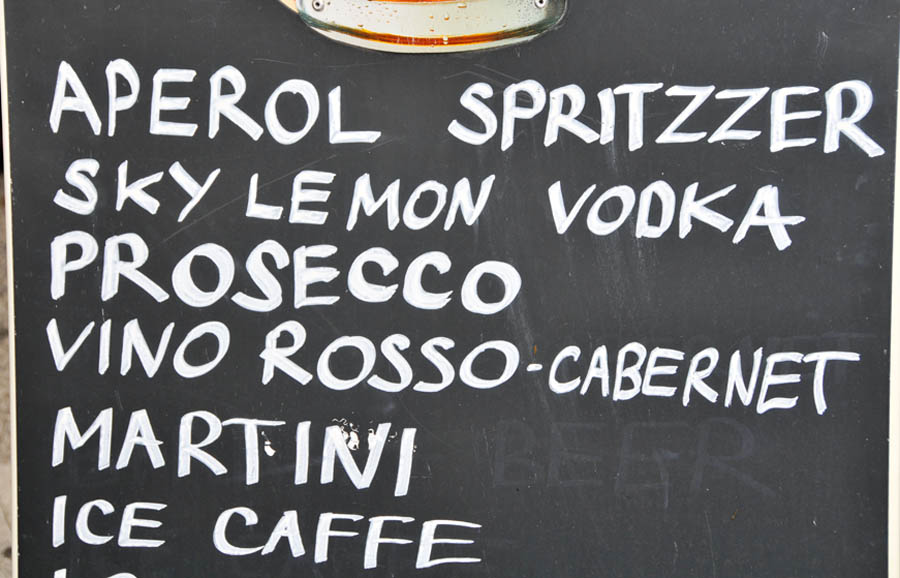
The bar offered a diverse drink menu.
Another use of the word (and the corresponding noun diversity) is now mainly to refer to people from different social, cultural or ethnic backgrounds, different genders, sexual orientations, etc.
President Trump issued a series of executive orders targeting diversity, equity, and inclusion programs in the public and private sectors.
Diverse comes from Latin divertere, to turn in separate ways.
The English word minute is both a noun and an adjective.
As a noun, minute is pronounced /ˈmɪnɪt/.
A minute is a period of time, sixty seconds or one sixtieth of an hour. They were twenty minutes late.
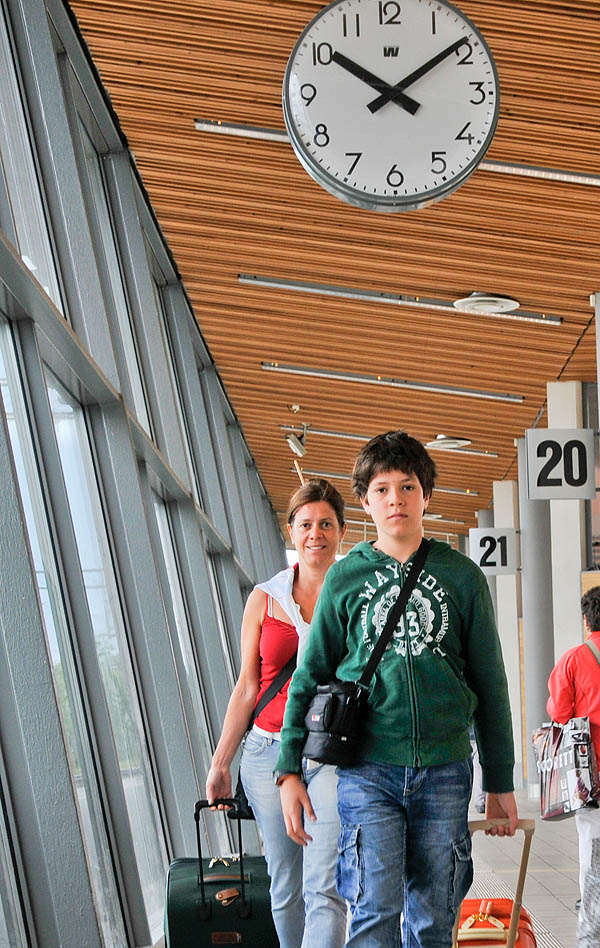
The train leaves in one minute.
Minute can also refer to a distance, how far you can walk or drive in a minute. Our house is just ten minutes from the bus stop.
Minute also indicates a very short time. Sit down, please; I’ll be with you in a minute.
In geometry, minute is a sixtieth of a degree of an angle.
The noun minute comes from Medieval Latin pars minuta prima, first small part, from minutus, made small. (Second comes from pars minuta secunda, second small part.)
The plural noun minutes refers to a record of the proceedings of a meeting. It comes via French minute from Latin scriptura minuta, small writing. The secretary read the minutes from the last meeting.
The adjective minute, pronounced /mʌɪˈnjuːt/, means extremely small. Just like the noun, it comes from Latin minutus, made small. With such a high resolution, minute details could be studied in the image.
There are many ways to express nothing in English.
ZERO
The most common way to refer to nothing as a number is zero or nought. (Nought is more common in British English.)
Zero comes from Arabic sifr (meaning ’empty’), which lives on in French chiffre and Swedish siffra. Italian zefiro comes from zephyrum, used by the mathematician Fibonacci.
OH (the letter O)
Especially when saying telephone numbers or dates, OH is used
10603 ’one oh six oh three’ or ’one zero six zero three’ 1605 sixteen oh five
And then, of course, we have the well-known secret agent James Bond, 007 ’double oh seven’.
NIL
Nil is used in sports, especially in team games.
At half-time, the score was two–nil.
American English prefers nothing to nil.
The score was three to nothing.
Nil is also used in business language.
The economy is expected to see nil growth next year.
Nil comes from Latin nihil or nihilum, which meant nothing.
Nothing, nada, zilch. Or, a polar bear couple with its cub in a snowstorm.
LOVE
In tennis scoring, love means zero. At the start of a game, the score is love–all. Six–love is called a bagel. Concerning the origin of the word love in tennis, one theory suggests that it may have come from the French l’oeuf, meaning egg. A zero could easily resemble an egg. However, this theory is disputed. There is no documented use of l’oeuf in sports meaning zero. On the other hand, zero on a scoreboard is also called a goose egg or, especially in cricket, a duck egg or a duck.
DUCK
When a batsman in cricket does not score any points (also called runs), it is called a duck egg or a duck.
NADA, ZILCH, ZIP
These are all slang words to denote nothing. Nada comes from Spanish nothing. Zilch was a comic character in an American magazine. The word could also have come from US college slang. Zip also comes from student slang, denoting a zero grade on a test.
NULL
Null is used in mathematics to represent the absence of something or the value of zero.
The word is also used in the legal phrase null and void, which implies that a contract, an agreement, etc., is not legally valid.
CIPHER
Cipher usually means a code or an encoded numeral or letter. It can also mean zero and is often used figuratively to refer to a nobody, someone of no consequence. The word is related to French chiffre and Swedish siffra. It is sometimes spelled cypher in British English.
What’s the difference between unsatisfied and dissatisfied?
UNSATISFIED
When you are unsatisfied, you are not yet satisfied or fulfilled. There is incompleteness, a lack of something. You are not getting everything that is needed. Unsatisfied can refer to both people and things and ideas.
Children often feel an unsatisfied hunger for love and acceptance. The defendant argued that the obligations under the contract were unsatisfied.
DISSATISFIED
When you are dissatisfied, you feel unhappy, displeased, disappointed, frustrated. Dissatisfied refers to how people feel.
Fred was dissatisfied with the wallpaper in his living-room.
Fred was dissatisfied with the wallpaper in his living-room
To sum up,
Unsatisfied = unfulfilled Dissatisfied = annoyed, not happy
Price refers to the amount of money you pay when you buy something.
The price of coffee had gone up by 12%.
Price is also used figuratively in the sense of consequence or cost:
He had to pay a high price for his support of the party’s failed candidate.
Price can also be used as a verb meaning to put a price on something, to say how much something costs or is worth.
He was reluctant to price the old furniture. The young couple thought the house was priced too high. Entrance is priced at €7 for adults and €5.50 for children.
To price in (with the stress on in) has two meanings:
1. To include the cost of something in the total price
You need to price in the cost of packaging and freight.
2. To consider a factor when deciding a price
We must price in the risk of increased raw material costs.
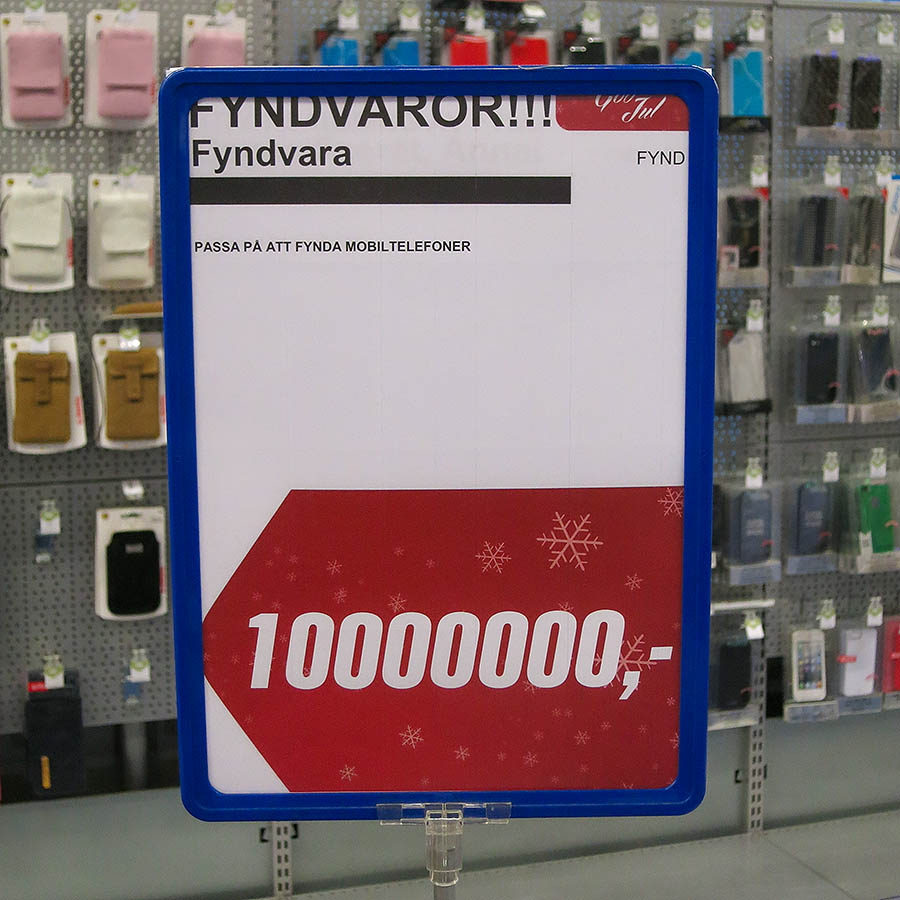
This price for a cellphone seems exorbitant
PRIZE
Prize (with a voiced s-sound) refers to an award earned in a competition or through talent. It is associated with achievement and recognition.
My daughter won first prize in the baking competition.
A prize flower or animal is one that is of very good quality, one that has won or deserves to win a prize.
A prize idiot is the same as a complete idiot.
As a verb, to prize has two meanings:
1. To value highly
That old photo is one of my most prized possessions.
2. To force open (sometimes also spelled prise)
I prized the lid open with a spoon. She prised the little boy’s fingers apart and took the pill from him.
Some language purists would maintain that each other refers to two people or things and one another to more than two, but the general opinion now is that the two expressions are interchangeable. However, one another is often seen as being more formal.
The two animals stared fiercely at each other. We have known one another for years.
Knowing when and how to use brackets and parentheses can be challenging. We will try and sort out the problem here.
Round brackets
Round brackets are used
to add extra information in text
Leonardo da Vinci (1452–1519) is considered one of the greatest artists ever. Cary Grant (born as Archibald Leach) starred in over seventy films.
to add personal comment
Hum in Croatia is the smallest town in the world (and very beautifully situated on top of a hill).
to define an abbreviation or acronym
UNITAR (The United Nations Institute for Training and Research) has its headquarters in Geneva, Switzerland.
to refer to another part of the same text
Exports increased by 6 % (Table 3). Production time can be reduced by using a new application (see Chapter 6).
in referencing
Such methods are based on direct observation (Jones et al., 2012).
Square brackets
Square brackets are used
to show that text has been added to a quotation
Several new products were introduced [on the company’s website].
to show that part of a quotation has been omitted (by using an ellipsis)
Relatives, friends and neighbours as well as his landlord, his employer, his former professor […] had all come to congratulate him.
(The Chicago Manual of Style recommends using the three dots without brackets. The Modern Language Association, on the other hand, recommends brackets to distinguish this kind of ellipsis from an ellipsis in the original text.)
when you capitalize the first letter of a quotation that is not capitalized in the original (or use lowercase where the original is capitalized)
Original:
The professor said, ”Perhaps the best example of Renaissance architecture is St. Peter’s Basilica in Vatican City”.
Paraphrased:
The professor told his students that ”[p]erhaps the best example of Renaissance architecture is St. Peter’s Basilica in Vatican City”.
around the Latin abbreviation sic (read more here).
To sum up:
Use parentheses to add information to something you have written.
Use brackets to change or add comments to somebody else’s words that you are quoting.
Braces (Curly brackets)
Curly brackets are mainly used in computer programming, mathematics, and science. They often identify the elements of a set.
Angle brackets (Chevrons)
Angle brackets are seldom used in English. They may indicate a website or something said in a foreign language. In some languages, double angle brackets are used instead of quotation marks.






Recent Comments