Your professional help to improve your written English

Category: language (Page 2 of 8)

Connotations in English and Swedish

What is a connotation?

Connotations are associations and feelings that a word evokes. They can be positive, negative, or neutral. Connotations are shaped by culture and context and may differ from person to person.

The difference in connotations between two languages must, of course, be taken into consideration by those communicating in the two languages.

Connotations can be shared by many people. The English word house to most people has a neutral connotation – it means a type of residential building, especially a one-family dwelling. The word home, on the other hand, has positive connotations of warmth, security, and family life.

Connotations may differ also between languages. While the Swedish word hem has the same connotations as the English home, Swedish hus has wider connotations than English house and may refer to any residential building irrespective of size, such as a block of flats.

Another example of a word with different connotations in English and Swedish is villa. In English, a villa is a large and luxurious country house, especially in continental Europe. In the UK it is a large, detached house in a residential area, especially from  Edwardian or Victorian time. Villa can also refer to a large country house of Roman times with farm and residential buildings around a courtyard. The Latin word villa meant manor, country estate.

In Swedish, a villa is a one-family house or a bungalow. The main goals in life of medelsvensson, the average Swede, are said to be villa, Volvo, vovve, a house, a Volvo, a doggie.

To make things more complicated, the Swedish word villa can also mean illusion or delusion.

A city in English refers to a large town. In Swedish, city has the connotation of downtown.

An amusing, and arguably misleading, example is North American restroom, a euphemism for lavatory or toilet. To non-native speakers the connotation with the verb rest, relax, will be natural. In my book about English–Swedish false friends I relate a story about an American who was picking up his Swedish friend at an airport. When they got in the car, the American said, ”Perhaps you need to go to the restroom?”, and without hesitation, the Swede answered, ”No, I can do that in the car”.

Interior of a small lavatory with a toilet, a wash-basin, and some towels. The image illustrates the North American word restroom which may have other connotations for to non-native speakers
Restroom?

To recognize connotations is crucial in localization, by which a product is adapted to a specific market. You can read more about it here.

Finally, a denotation is the dictionary definition of a word, the objective meaning of the word.

Diverse is different

In a previous blog post we looked at the difference between different and various.

Another word that is used when we talk about difference is diverse.

Diverse indicates that people or things are very different from each other, that they come in a great variety of possible types, styles, etc.

The club offers diverse leisure activities such as golf, hiking, and canoeing.

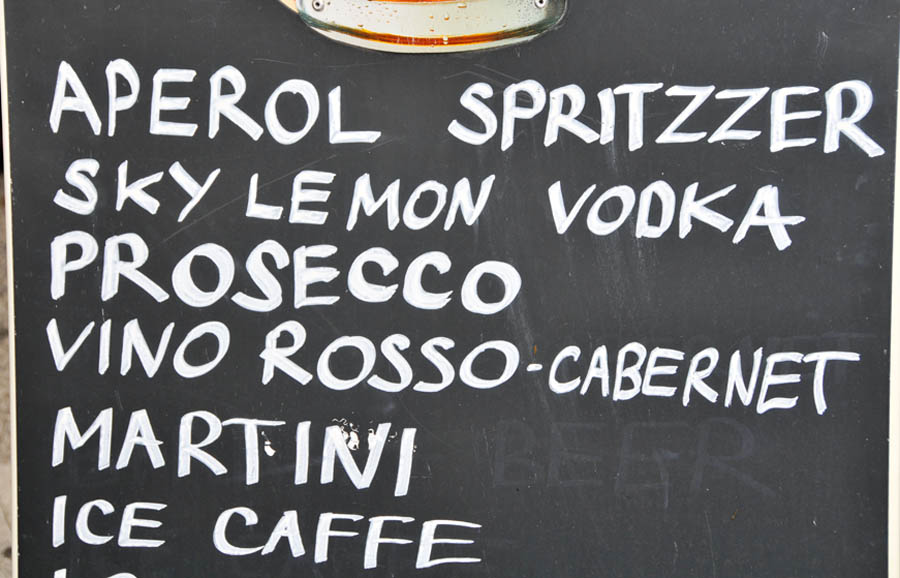
A sign in a bar offering a diverse drink menu.
The bar offered a diverse drink menu.

Another use of the word (and the corresponding noun diversity) is now mainly to refer to people from different social, cultural or ethnic backgrounds, different genders, sexual orientations, etc.

President Trump issued a series of executive orders targeting diversity, equity, and inclusion programs in the public and private sectors.

Diverse comes from Latin divertere, to turn in separate ways

Minute also means very small

The English word minute is both a noun and an adjective.

As a noun, minute is pronounced /ˈmɪnɪt/.

A minute is a period of time, sixty seconds or one sixtieth of an hour.
They were twenty minutes late.

A woman and her son in a railway station. A clock above them shows nine minutes past ten. The word minute is a measure of time, but it can also mean very small.
The train leaves in one minute.

Minute can also refer to a distance, how far you can walk or drive in a minute.
Our house is just ten minutes from the bus stop.

Minute also indicates a very short time.
Sit down, please; I’ll be with you in a minute.

In geometry, minute is a sixtieth of a degree of an angle.

The noun minute comes from Medieval Latin pars minuta prima, first small part, from minutus, made small. (Second comes from pars minuta secunda, second small part.)

The plural noun minutes refers to a record of the proceedings of a meeting. It comes via French minute from Latin scriptura minuta, small writing.
The secretary read the minutes from the last meeting.

The adjective minute, pronounced /mʌɪˈnjuːt/, means extremely small. Just like the noun, it comes from Latin minutus, made small.
With such a high resolution, minute details could be studied in the image.

Unsatisfied and dissatisfied

What’s the difference between unsatisfied and dissatisfied?

UNSATISFIED

When you are unsatisfied, you are not yet satisfied or fulfilled. There is incompleteness, a lack of something. You are not getting everything that is needed. Unsatisfied can refer to both people and things and ideas.

Children often feel an unsatisfied hunger for love and acceptance.
The defendant argued that the obligations under the contract were unsatisfied.

DISSATISFIED

When you are dissatisfied, you feel unhappy, displeased, disappointed, frustrated. Dissatisfied refers to how people feel.

Fred was dissatisfied with the wallpaper in his living-room.

A msn is standing by a window, looking out. A TV set is mounted on a wall. The wallpaper has a pattern of large flowers in black and white. The image illustrates the concept of dissatisfied.
Fred was dissatisfied with the wallpaper in his living-room

To sum up,

Unsatisfied = unfulfilled
Dissatisfied = annoyed, not happy

Some related words:

Dissatisfaction – disappointment, discontent
Dissatisfactory – causes dissatisfaction 
Unsatisfactory – inadequate
Unsatisfying – failing to satisfy

Read about uninterested and disinterested here.

Price or prize?

What’s the difference between price and prize?

PRICE

Price refers to the amount of money you pay when you buy something.

The price of coffee had gone up by 12%.

Price is also used figuratively in the sense of consequence or cost:

He had to pay a high price for his support of the party’s failed candidate. 

Price can also be used as a verb meaning to put a price on something, to say how much something costs or is worth.

He was reluctant to price the old furniture.
The young couple thought the house was priced too high.
Entrance is priced at €7 for adults and €5.50 for children.

To price in (with the stress on in) has two meanings:

1. To include the cost of something in the total price

You need to price in the cost of packaging and freight.

2. To consider a factor when deciding a price

We must price in the risk of increased raw material costs.

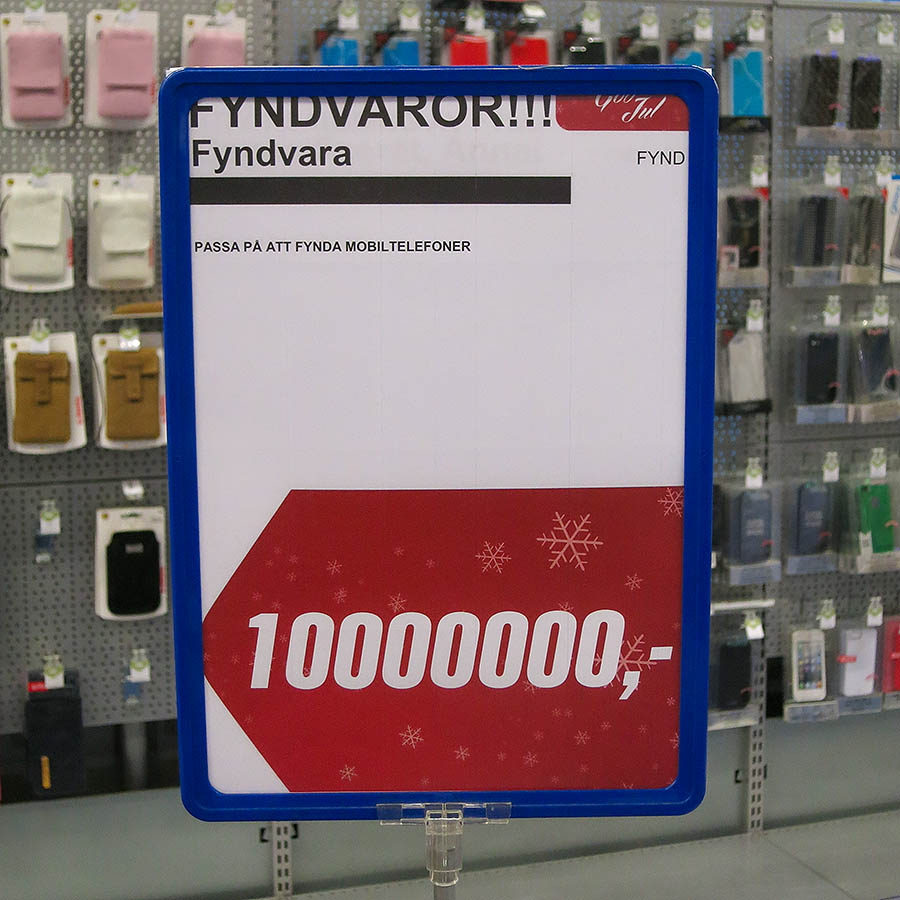
The image shows a large price tag with an exorbitant price for bargain cellphones.
This price for a cellphone seems exorbitant

PRIZE

Prize (with a voiced s-sound) refers to an award earned in a competition or through talent. It is associated with achievement and recognition.

My daughter won first prize in the baking competition.

A prize flower or animal is one that is of very good quality, one that has won or deserves to win a prize.

A prize idiot is the same as a complete idiot.

As a verb, to prize has two meanings:

1. To value highly

That old photo is one of my most prized possessions.

2. To force open (sometimes also spelled prise)

I prized the lid open with a spoon.
She prised the little boy’s fingers apart and took the pill from him.

Each other or one another?

Which is correct, each other or one another?

Some language purists would maintain that each other refers to two people or things and one another to more than two, but the general opinion now is that the two expressions are interchangeable. However, one another is often seen as being more formal.

The two animals stared fiercely at each other.
We have known one another for years.

A cat and a dog are looking fiercely at each other. The image illustrates each other and one another.
The two animals stared fiercely at each other

The genitive is used with an apostrophe plus s:

They compared each other’s (one another’s) notes.

Brackets and parentheses

Brackets and parentheses are punctuation marks used to set apart a segment of text from the surrounding text. (By the way, parentheses is the plural form of parenthesis).

You are, of course, aware of the fact that British English and American English do not always agree. BE lift is elevator in AE;  a BE pavement is a sidewalk in AE. Holiday is vacation, handbag is purse, queue is line, tube is subway, etc.

When it comes to brackets and parentheses, the situation is just as confusing.

These marks

Brackets

are called brackets or round brackets in British English. In American English they are parentheses.

Brackets in American English are called square brackets in British English. They look like this:

Square brackets

Then we have these:

Braces

They are called braces in both British and American English, but in BE they are also called curly brackets.

Historically, the earliest form of brackets were angle brackets or chevrons. They look like this:

Angle brackets, chevrons

In a later post we take a look at how to use these brackets and parentheses.

[sic]—What’s that?

Sic comes from Latin and means so, thus, in this manner.

Sic erat scriptum means so written, thus it had been written.

When quoting something, writers may use sic to indicate that a word or phrase that looks wrong is indeed an exact reproduction of the original—the mistake appears in the source. Quotations should always be in their original form.

Sic is usually written in square brackets: [sic]. The word sic is often seen as a loanword that does not require italics, but in the United States, sic is usually italicized.

Sic can be used to mark an actual error or misprint or a conspicuous detail in the text, a word that seems odd or erroneous.

Since sic is used to draw the reader’s attention to a mistake by the writer, it often indicates disapproval and may signal superciliousness or be condescending. You should use caution when writing [sic] in order not to sound haughty or malicious.

There [sic] son had graduated from Cambridge.
The correct spelling is, of course, their.

She carries out research at the John [sic] Hopkins University.
This is a common error. The correct name is Johns Hopkins University, named after the entrepreneur and benefactor Johns Hopkins. His great-grandmother’s name was Margaret Johns; she married Gerard Hopkins and they named their son, the benefactor’s grandfather, Johns Hopkins. His grandson had the same name.

You can find a number of Latin abbreviations used in English here.

Punctuation marks and quotations

In a previous blog post we looked att the use of the apostrophe as, among other things,  a quotation mark.

When it comes to punctuation marks, they are placed differently in quotations in US English and UK English.

In US English, commas and periods at the end of a quote are placed within the quotation marks:

”My boyfriend gave me this beautiful necklace,” Susan said.
The reporter described the situation as ”chaotic.”

In UK English, all punctuation marks are placed outside the quotation marks (except when they are part of the quotation):

‘My boyfriend gave me this beautiful necklace’, Susan said.
The reporter described the situation as ‘chaotic’.

In both UK and US English, a question mark or an exclamation mark is placed inside the quotation when it is part of the quotation:

Looking at her calendar, she asked, ”How soon can you have it ready?”

In the following example, the question mark is not part of the quotation but of the whole sentence, which is a question:

How many of the students thought the lecture was ”very interesting”?

A lecturer in front of a group of students. The image illustrates the use of punctuation marks in quotations.
How many of the students thought the lecture was “very interesting”?

A tricky mark—the apostrophe

The apostrophe is a punctuation mark in the Latin and some other alphabets. It is used to indicate quotations, to show that one or more letters are left out (contractions), to show the possessive form (genitive) of names and nouns, and to mark the plural of single letters.

QUOTATION

In UK English, single quotation marks are commonly used (even if the US English system is also accepted), while US English prefers double quotation marks.

UK English: ’Welcome to London’, he said.

US English: A man appeared in the doorway asking, ”Is there a restroom somewhere here?”

When a quote appears inside another quote, the opposite style of quotation marks is used:

UK English: The woman looked at the policeman and said, ’All I heard was ”I can’t find my keyes”’.

US English: The woman looked at the officer and said, ”All I heard was ’I can’t find my keyes.’”

Read about punctuation marks and quotations here.

CONTRACTION

In a contraction, an apostrophe represents one or more letters that have been omitted.

I’ve  I have
I’d  I had or I would
He’s  He is
They’re They are
She can’t She cannot
You mustn’t You must not
Singin’ in the rain Singing in the rain
O’Leary  [descendant] of Leary
Rock’n’roll  Rock and roll

An apostrophe can represent thousand:

15’ = 15 000

An apostrophe can replace the first two numbers in a year:

This was popular in the ’80s = in the 1980s

POSSESSIVE

An apostrophe is used with an s after names or nouns to show ownership or close connection.

This is the boy’s room
Let me introduce my wife’s best friend

In the plural, there is no s after the apostrophe:

This is the boys’ room

Especially in spoken language, the plural is expressed using of: This is the room of the boys.

A sign outside a bar with the word cocktail's. The use of an apostrophe is wrong.
Not quite right…

PLURAL OF LETTERS

An apostrophe is used to mark the plural of single letters:

It’s hard to distinguish between your g’s and q’s.

Mind your p’s and q’s (be careful about what you say or do).

 Don’t confuse an apostrophe with an accent! Read more here.

« Older posts Newer posts »

© 2026 copyeditor.se

Theme by Anders NorénUp ↑