Your professional help to improve your written English

Category: writing (Page 4 of 7)

What is a backronym?

In an earlier blog post we looked at acronyms.

While an acronym is formed from a phrase, a backronym (or bacronym) is a word that is supposed to come from a phrase, but that phrase has been constructed (often humorously) to fit an existing word.

A well-known example of a backronym is posh, meaning stylish, elegant, upper-class. There is a popular belief that posh came from ’port out, starboard home’. It was thought that rich people would book two cabins on their voyage to India and back home, one on the port side of the ship and the other on the starboard. In that way they made sure that they could travel more comfortably, away from the heat of the sun. However, posh was quite simply a slang word in the late 1800s for an overdressed dandy. Another meaning of posh was a small coin, money. 

Starboard side of the deck of a passenger ship.
Port or starboard?

Another backronym is golf, which is – erroneously – said to come from gentlemen only, ladies forbidden. The word golf is considered to come from Middle Dutch cold, meaning stick or club.

A few more backronyms:

CopConstable on patrol
FordFix or repair daily
IBMIt's Better Manually
NavyNever again volunteer yourself
TipTo ensure promptness

A CAPTCHA is a distorted code you copy on a website to access a page. This is to prevent automated attacks on a website. The acronym is said to mean Completely automated public Turing test to tell computers and humans apart. However, the word is most likely a contrived acronym, in other words, a backronym. It was probably made in analogy with gotcha, ’I have got you’, meaning that you have caught somebody doing something wrong. A gotcha also means a sudden unexpected problem. The interesting thing is that there now is another way to prevent hackers from accessing a web page – and it is called GOTCHA, said to mean Generating panOptic Turing Tests to Tell Computers and Humans Apart. If you don’t know Alan Turing or the Turing Test, read here or here.

The Morse signal SOS is said to mean Save our Ship or Save our Souls. In fact, the alarm signal is …- – -… (three short, three long, three short without any pause), while the letters SOS in Morse code are three short, pause, three long, pause, three short.

Another distress signal is Mayday, mainly used by airplane or ship crews. It is used in voice communication via radio. In a life-threatening emergency the word is repeated three times. The word is said to have been created by Frederick Rockford, a radio officer at Croydon Airport in London in 1923. Mayday supposedly comes from the French m’aidez meaning ‘help me’ or venez m’aider meaning ‘come and help me’. So Mayday is not a backronym.

Neither is May Day, which is something completely different. It refers to the first of May (or the first Monday in May) being a festival in many countries to celebrate the arrival of spring.
Acronyms and initialisms

Acronyms are a type of abbreviation. They are formed by the first letter of each word in a phrase and usually, but not always, written in capital letters. An acronym is pronounced as a word:

ASAPAs soon as possible
HIRCHuman–industrial robot collaboration
NASDAQNational Association of Securities Dealers Automated Quotations
NATONorth Atlantic Treaty Organization
PINPersonal identification number
POTUSPresident of the United States
SARSSevere acute respiratory syndrome
SWOTStrengths, weaknesses, opportunities, threats
UNESCOUnited Nations Educational, Scientific and Cultural Organization
WADAWorld Anti-Doping Agency

Some words created as acronyms have become so common that people do not know they are acronyms. Some examples:

laserlight amplification by stimulated emission of radiation
radarradio detection and ranging
scubaself-contained underwater breathing apparatus
sonarsound navigation and ranging
taserThomas A Swift's Electric Rifle

There are other abbreviations formed by the first letter of each word, but they are pronounced as individual letters. These abbreviations are called initialisms. Some examples:

B2BBusiness-to-business
BMXBicycle motocross
CEOChief executive officer
CIACentral Intelligence Agency
DIYDo-it-yourself
FAQFrequently asked questions
FBIFederal Bureau of Investigation
IPOInitial public offering
NHLNational Hockey League
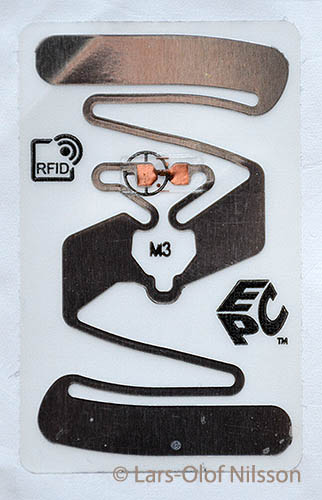
RFIDRadio frequency identification
WWWWorld Wide Web
An RFID tag.
Detail of an RFID tag used on a garment

The most common initialism is probably OK. It is such a popular abbreviation that it deserves its own blog post.

Communicating on the internet has created many abbreviations:

2F4UToo fast for you
AFKAway from keyboard
BBSBe back soon
LOLLaughing out loud
KISSKeep it simple, stupid
ROFLRolling on the floor laughing
YOLOYou only live once

How the first letter in an abbreviation is pronounced determines whether the indefinite article should be written a or an. Compare the following:

A UNESCO spokespersonAn unknown person
An FBI agentA federal agent
An HR managerA human resources manager

In my next blog post you can read about backronyms.

Abbreviations

The word abbreviation comes from the Latin verb abbreviare with the adjective brevis, which means short. When you abbreviate something, you make it shorter.

Many abbreviations are formed by leaving out all except the first few letters of a word. These abbreviations often end with a full stop.

abstr.abstract
ad., advert.advertisement
admin.administration
approx.approximately
betw.between
cont.continue, continued
doc.document
esp.especially
est.estimated
etc.et cetera
examexamination
fig.figure
fut.future
infoinformation
introintroduction
lab.laboratory
lang.language
memomemorandum
min.minimum, minute
misc.miscellaneous
mod.modern
obs.obsolete
orig.origin, original(ly)
pop.popular
St.Street
tel.telephone
temp.temperature, temporary
vol.volume

Names of the months are abbreviated according to this general principle of just shortening words.

Jan.January
Feb.February
Mar.March
Apr.April
MayMay
Jun.June
Jul.July
Aug.August
Sep. or Sept.September
Oct.October
Nov.November
Dec.December

There is more variation in how the days of the week are abbreviated.

Mon.Monday
Tu., Tue. or Tues.Tuesday
Wed.Wednesday
Th., Thu., Thur. or Thurs.Thursday
Fri.Friday
Sat.Saturday
Sun.Sunday

Many abbreviations leave out letters in the middle of a word and end with the last letter of the word. Here are some examples:

apt.apartment
attn.attention
atty.attorney
dept.department
fwdforward
govt.government
hr.hour
Jr.junior
Ltd.Limited
mfg.manufacturing
mgmt.management
qty.quantity
tsp.teaspoon
yd.yard
yr.year

Some titles also follow this principle:

Dr.Doctor
MessrsPlural of Mr
MrMister
MrsMistress
MsgrMonsignor
St.Saint

You can read more about titles here.

Geographical names are often abbreviated:

Cambr.Cambridge
E. Afr.East Africa
Scand.Scandinavia
TXTexas
Victoria Rd.Victoria Road

Names of the states in the USA are abbreviated to two uppercase letters. You can find them here. The capital Washington is in the District of Columbia, abbreviated DC.

Abbreviations can also become words in their own right and we no longer realise that they are abbreviations.

Hankie (or hanky) is short for handkerchief.

The American colloquialism nabe comes from neighborhood.

Pram is short for perambulator, a carriage for a baby.

Soccer is an abbreviation of association football, which is different from American football.

Two girls lying on the grass watching a soccer game.
The girls were watching a soccer game

In American English abbreviations are usually followed by a full stop. In British English this generally applies to abbreviations that are formed by the first letter or the first few letters of a word as in the first table above.

There are many Latin abbreviations in the English language, which you can read about here and here.

Acronyms and initialisms are also abbreviations. Read about them here.

Like or such as?

Some writers use like when they should have used such as instead.

When you suggest a category or give something as a type example, write like:

Uncle Bill often listens to crooners like Bing Crosby.

Here Bing Crosby represents a specific type of singers, crooners, who often perform in a sentimental way (think of Crosby’s version of White Christmas and you will understand!).

The sentence does not state that Uncle Bill actually listens to Bing Crosby, only that he listens to singers of that type.

When you specify singers that Uncle Bill listens to, use such as:

He collects vinyl records with singers such as Dean Martin, Fred Astaire, Perry Como, Tony Bennett and Nat King Cole.

These singers are generally known as crooners, and here we understand that Uncle Bill has their records.

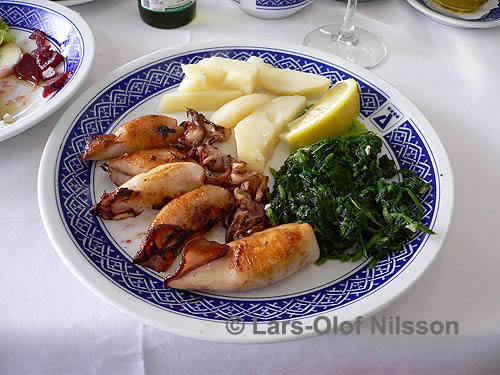
A plate of squids.
Seafood such as octopus is healthy

Some more examples:

You should eat more fruits like oranges.
Citrus fruits such as tangerines, clementines and lemons are rich in C vitamin. 
Advanced tools like robots can reduce production costs.
Robots can take over more complicated tasks such as welding and grinding.
The course covers basic concepts of business administration such as accounting, finance, human resources and marketing.

A songwriter like Leonard Cohen will be remembered forever (Songwriters similar to Cohen will never be forgotten).
A songwriter such as Leonard Cohen will be remembered forever (Leonard Cohen will never be forgotten).

There should not be a comma or a colon after such as, but you can have a comma before such as. Leave out that comma if what comes after such as is additional and essential information.

To sum up:

Use like when you refer to a category (you imply comparison).

Use such as when you give actual examples (you imply inclusion).

Enquire and inquire

Enquire and inquire both mean to ask or seek information about something. The corresponding nouns are enquiry and inquiry.

Basically there is no big difference in meaning between these words. It can be generally said that inquire is the common form in the USA and enquire in Britain.

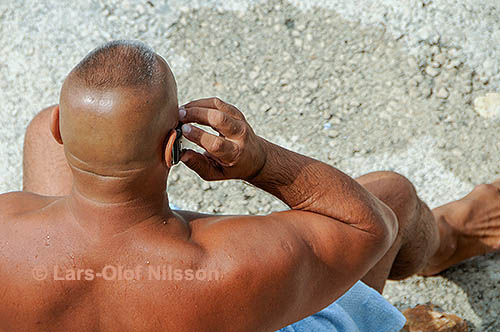
Burly man on a beach speaking on a cellphone. He is enquiring about renting a sunshade.
The man enquired about renting a sunshade

However, there are writers – particularly in Britain – who make a slight distinction between the two forms of the word. They use enquire simply as a synonym of ask in a general sense. Inquire is used with the meaning of making a formal investigation.

My boss enquired about the passing away of our dog.

The police are making inquiries to find the owner of the abandoned car.

If you write American English, you could use inquire, but otherwise you need not worry about which form is correct. As always, choose one form and be consistent throughout your text!

Don’t say too much!

Writers often say too much by adding unnecessary words. Phrases such as free gift and joint cooperation are examples of tautology (saying the same thing twice) or pleonasm (using more words than necessary). Words that do not add information are called redundant words. Get rid of redundancies!

Here are some examples of unnecessary words:

General consensus – if you have a consensus, all agree
Foreign imports – imports are always from another country
Unexpected surprise – it wouldn’t be a surprise if you expected it
Personal friend – if  you have a friend, you have a personal relationship. Someone who is not a friend may be an acquaintance
Past history – history is about the past
The two twins – would you expect them to be three?
Four different colours – if something comes in four colours, you can be sure they are different
Unsolved mystery – if you have solved it, it is not a mystery

I am sure you can see what’s wrong in the following examples:

Moment in time
Period of time
Few in number
On a daily basis
In actual fact
Sum total
Close proximity
Necessary requirement
New beginning
Advance planning
Outward appearances
The reason why
Return back

Combinations with together and each other are common – and unnecessary:

Combine together
Collaborate together
Join together
Merge together
Mix together
Blend together
Interact with each other

Another often unnecessary word is completely:

Completely surrounded
Completely empty
Completely unanimous

A man lying on a sun chair on a beach.
Completely alone? No, alone!

We might include end result and final outcome in the list of unnecessary words, but these combinations are acceptable, since it is possible to also talk about a preliminary result or a preliminary outcome.

Some abbreviations:

Since LCD means liquid crystal display, you should not write LCD display.

In PIN and ISBN, N stands for number – writing number after the abbreviation is pleonastic.

RAM means random access memory – don’t add memory.

UPC stands for universal product code and therefore you should not write UPC code.

ATM means automated teller machine – write only ATM.

Pleonasm is sometimes used as a rhetorical device for emphasis:

Each and every
Any and all
First and foremost
To all intents and purposes

Such emphasis is common in legal texts:

Null and void
Aid and abet
Fit and proper
Cease and desist
Sole and exclusive

Redundant words are so common that we often don’t notice them. Read your text with an eye on redundancies – and delete them!

Less or fewer?

Which is correct, less cars or fewer cars?

Perhaps you find it difficult to sort out words such as little, much, few, a few, many, less, more, a lot of and plenty of.

MANY AND MUCH

Many is always used with the plural form of countable nouns (you can read about countables and uncountables here).

She has written many articles about ancient Rome.
We have many students from Asia.

Much is always used with uncountable nouns.

The production process requires much energy.
Don’t drink too much beer!

Both many and much take the comparative form more.

There were more students last year.
I wish I had more time.

A lot of, lots of and plenty of can all be combined with both countables and uncountables.

There are lots of nice places to visit along the coast.
Take it easy – you have plenty of time.

FEW AND LITTLE

Few means ’not many, almost none’. Use few with countable nouns.

He had few interests and was quite bored.
There are few artists who have had such success.

A few means ’two or three, a handful of’. Use a few with countables.

We saw a few birds by the river.
A few members of the staff had already arrived.

The difference between few and a few applies also to little and a little. Both little and a little suggest ’not much’, but there is a difference in meaning.

I have little money sounds rather negative; you would like to have more.

I have a little money implies that you actually can buy something, although nothing expensive.

I have little money but much time.
Since he had little experience, he did not get the job.

A little rain will be good for our garden.
I would be grateful for a little extra time

Just a couple of cars on the Autobahn in Austria with some farm buildings on a hill in the background
Fewer cars and less traffic on the way back home

FEWER AND LESS

Fewer is the comparative form of few. It is used with countables.

The fewer mistakes you make in your report, the better it is.
The company has fewer employees than I expected.

Some writers use the word less where they should have fewer instead. The correct choice is to use less with an uncountable.

I like my new job, even if it gives me less money.
Perhaps you should drink less beer.

Less is used before than in expressions of time and measurements.

They had lived there for less than two years.
My job is less than three kilometres from our house.

There is also the form lesser, meaning ’not as great in size or importance as something else’.

Do you consider this a lesser crime?
We need to choose the lesser of two evils.

MORE

More is the comparative of both many and much.

I wish I had more money.
This year there are more students from Africa.

How to start and end a letter or an email

In formal correspondence it is important to start – and end – a letter with the right tone.

How you can begin a letter or an email

If you know the name of the recipient, use the title and the surname after the word Dear.

Dear Ms O’Connor,
Dear Mr Harding,
Dear Dr Johnson,
Dear Professor Green,

Using the abbreviated form Prof may seem less respectful, and the full form is recommended.

As mentioned here, there is usually a period (a full stop) after abbreviated titles in American English. In American English the salutation is usually followed by a colon instead of a comma.

If a person’s name does not reveal whether it is a man or a woman and you are not sure, write the full name:

Dear Kim Nelson,
Dear Taylor Smith,

Don’t know the name?

If you do not know the name of the person you are writing to, try to find it out. Check the website of the journal, university, department, organisation, company, etc., under ”Staff”, ”About us” or ”Contact us”. You might also find out a person’s name on LinkedIn. Another option would be to call the office and ask for the name.

If you cannot find the name but know the person’s function, you can write, for example,

Dear Editor,
Dear Librarian,
Dear Recruiting Manager,
Dear Chief Technology Officer,
Dear Communications Director,
Dear President of Sales,
Dear Social Media Specialist,
Dear Research Assistant,
Dear Supervisor,

If you know neither the name nor the function of the person you are writing to, write

Dear Sir/Madam, and if you know the recipient is a man (woman), write Dear Sir, (Dear Madam,). If there are more than one recipient, you can write Dear Sirs,.

Some writers use the phrase

To whom it may concern, (in American English To Whom It May Concern),

but that may seem too impersonal.

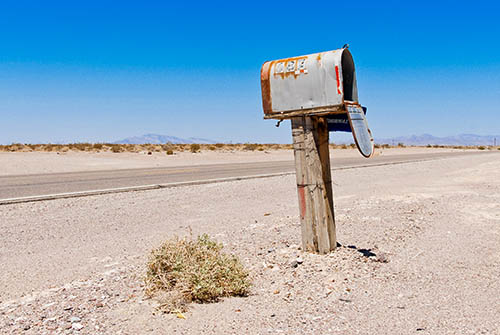
Battered letterbox by the roadside in the US desert
Perhaps less suitable for formal letters

Ending a letter or an email

To end a formal letter to a person whose name you know, write

Yours sincerely, (mainly British usage)
Sincerely yours, (mainly American usage)

If you do not know the name of the recipient, write

Yours faithfully, (British English)
Yours truly, (American English)

Slightly less formal endings would be

With best regards,
With kindest regards,

And more informal:

Regards,
Kind regards,
Best regards,

These last examples would be suitable in an email, since emails are seen as less formal than letters.

A hyphen is not the same as a dash

A hyphen and a dash are two different things—and there are two dashes. Confusing? Let’s try and sort it out.

This is a hyphen : –
This is an en dash:
This is an em dash: —

HYPHEN

To begin with, in your native language (other than English) you can perhaps insert a hyphen when a word has to be split up at the end of a line. This is very unusual in English texts. And nowadays it is unusual in any text written on a computer, since the line breaks are inserted automatically. Even when a text is right-justified (the text is aligned with the right margin), the word processor adjusts the line length by changing the spaces between words. So we need not worry about this use of the hyphen.

A much more common use of the hyphen is in compounds, inside words or word combinations. Re-establish is a word made up of the prefix re and the verb establish. It means establish again.

We use a hyphen in compounds such as self-esteem, fifty-six, far-reaching, blue-green, sister-in-law and state-of-the-art. However, there are many compounds in English that are written without a hyphen—financial manager, production plan, information technology, etc. And many compounds are written in one word—airport, football, input, headache, etc. You can read more about compounds here.

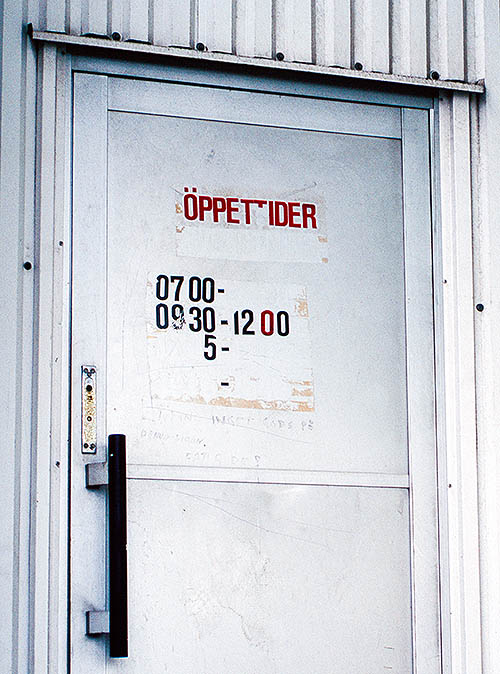
Door with incomplete text showing opening hours.
Not much correct here…

THE EN DASH

An en dash has its name from the fact that it is as wide as the letter N. Consequently, the longer dash is called em dash.

The en dash (–) is used to indicate a range of, for example, dates, years or pages in a book:

You can find his most famous speech on pages 149–153.
Barack Obama was President of the USA 2009–2017.
The conference was held 31 August–2 September.

The en dash can also indicate a relation or connection:

His research focuses on human–robot collaboration.
They usually took the Paris–Brussels train.
They had a close mother–daughter relationship.

Notice that you cannot use a dash if you write between or from. It is wrong to write *between 2009–2017 or *from 149–153. (For the use of the asterisk here see the note at the end of this page.)

Obama’s presidency was between 2009 and 2017.
The speech is printed on the pages from 149 to 153

Street sign with most of the text hidden and wrong use of a dash
Looks like an em dash here, which is wrong

THE EM DASH

The em dash (—) is longer than a hyphen or an en dash. The em dash indicates a break or an insert in a sentence. It can be used in pairs like brackets or alone to separate the end of a sentence from the main part.

Most of their garden products—lawn mowers, grass trimmers, hedge trimmers and leaf blowers—were on sale in October.
His fame had spread far and wide—he had shown that he was a very talented footballer—and he could now sign a new and better contract.
I had better put on winter tyres right away—there’ll be snow any day now.

There are no spaces before and after a hyphen, an en dash or an em dash.

However, some British style guides recommend to use an en dash with spaces before and after it instead of an em dash. If you write for a journal, make sure to consult its guide for authors.

In my next blog entry I will show you where to find dashes on a computer keyboard.

An old furniture salesman or an old-furniture salesman?

As you could see here, most English compounds are not hyphenated. However, a hyphen is used when a compound is a modifier. A modifier changes or adds to  the meaning of the word that follows. In the phrase That’s a big house, the word big is a modifier; it adds something to the concept house.

When the compound is a modifier, especially when it modifies a noun, we use a hyphen:
This is a well-written article.

But there is no hyphen in the following sentence:
I think the article is well written.

Here are some more examples:

They are five-year-old children. (Notice that there is no plural -s).
The children are five years old.

He is a part-time mechanic.
He works part time.

This is a long-term project.
We must plan for the long term.

The hyphen often helps to clarify what the writer wants to say.

He is selling his little-used bike means that the bike has not been used much.
He is selling his little used bike would mean that the bike is little (small) and has been used.

This is obviously a little-used bike

Do you understand the difference between a single family home and a single-family home?
And between a small business owner and a small-business owner?
Or an old furniture salesman and an old-furniture salesman?

We can leave out the hyphen if there is no risk for confusion:

I found a used car dealer.

An adverb ending in -ly is not followed by a hyphen:

A smartly dressed woman

« Older posts Newer posts »

© 2026 copyeditor.se

Theme by Anders NorénUp ↑