Your professional help to improve your written English

Tag: difference (Page 3 of 5)

What’s the difference between different and various?

In my job as copyeditor I notice that writers tend to overuse different when they should write various instead.

Different, as you know, means that something is not the same as something else. One thing is different from another thing, or two or more things are different, not alike.

A young man and a middle-aged man wearing different models of sunglasses. The image illustrates the difference between different and various.
They have different models of sunglasses

Various implies that there is a variety among things; there are several different variants of something. Various is used before a plural noun about things that are of the same type but not all of exactly the same kind.

A display of various models and colours of sunglasses. The image illustrates the difference between different and various.
Various models and colours of sunglasses

Usually, the preposition from comes after different: Her latest novel is very different from anything she has written before. However, some writers prefer than after different. I would use than only with the comparative form: These two are more different than those.  Different than is common in US English. Sometimes I also see different to, which seems to be more common in British English, but you should avoid using different to in writing.

I recommend that you write different when you want to emphasise that there really is a difference. And write from instead of than or to! Write various to indicate that there are several types that are different from each other, that there is a variety of things.
Experience or experiences?

It may be difficult to understand the difference between experience and experiences.

Experience has two meanings. The first is something that has happened to you. You might say, I had a strange experience on my way to work this morning.

This experience can take the plural form, experiences:

He talked about his bad experiences with cheap hotels.
You wouldn’t believe me if I told you about my experiences in the Himalayas.

The other meaning of experience is what you have learnt from studies or work or from familiarity with something. This is what you would write in your CV. Experience in this case is an uncountable noun; it cannot be used in the plural.

You must have at least five years of teaching experience.
In my experience, this is a very good car.

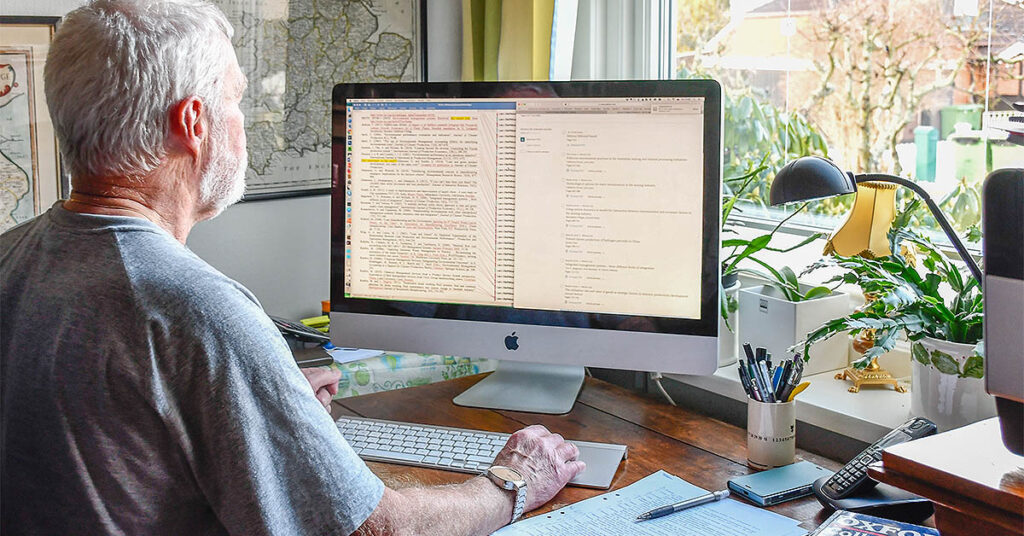
Man typing on a computer keyboard. The screen shows two documents. The image illustrates the use of the word experience as opposed to experiences.
Experience of computing is always valued

Experience can also be a verb:

She experienced a sense of being valued for her brains and not only for her beauty.

Economy or economics?

What’s the difference between economy and economics?

ECONOMY

Economy comes from a Greek word meaning household management.

One definition (from investopedia.com) is that economy is ”a complex system of interrelated production, consumption, and exchange activities that ultimately determines how resources are allocated among all the participants”. A government may look at different ways to stimulate the economy.

Another definition of economy is careful management of available resources. We can talk about the fuel economy of a car.

(You can read about the adjectives economic and economical here.)

ECONOMICS

According to wikipedia.org, economics is “the social science that studies the production, distribution, and consumption of goods and services”. Economics focuses on how economies work.

Adam Smith, ”the father of economics”, defined economics as the science of wealth.

Economics is usually divided into two disciplines:

Macroeconomics looks at how the economy as a whole works, how economies grow, change, and go through cycles. This can be about inflation, unemployment rates, monetary policy, foreign trade, etc. 

Microeconomics looks at how supply and demand change over time, how people and businesses work, how people react to changes in prices, and how they make financial decisions.

Are you grateful or thankful?

We use grateful and thankful to express our thanks for something. Even if the two words are often used interchangeably, there is a difference between them. So, what is the difference between grateful and thankful?

GRATEFUL

Grateful is used to express our gratitude when somebody is kind to us or helps us in a way that will have a long-time effect.

Many thanks for helping us move into our new flat. We are so grateful.
I am particularly grateful to my supervisor for her support and encouragement.

You can feel grateful when you are in a third-world country and realise that at home you have access to fresh air and clean water.

You can use grateful when you make a request in a formal letter:

I would be grateful if you would send me your latest brochure.

THANKFUL

Thankful is used when you feel relieved that something dangerous or unpleasant did not happen.

We had a burglary last week. I’m so thankful that my computer was not stolen.
My brother had a nasty car accident. We are all thankful that he was not seriously injured.

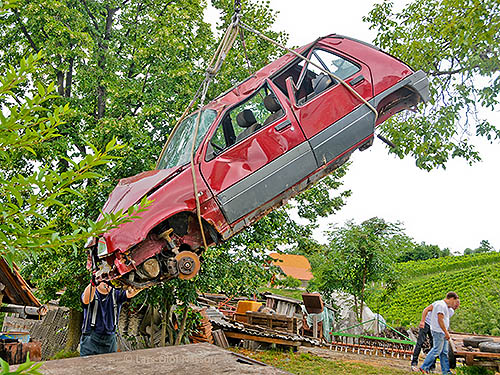
A damaged car is being lifted on to a lorry. The image illustrates the difference between grateful and thankful.
A nasty car accident

You are also thankful when somebody has done something and the situation would have been much worse if they had not done anything.

To sum up, if you are grateful, you express gratitude to somebody for something they have done or given and if you are thankful, you feel relief or happiness over something.

The corresponding nouns are gratitude and thankfulness.

Afraid of and afraid for

There is a clear difference between afraid of and afraid for.

AFRAID OF

When you are afraid of, for example, snakes, you have a fear that snakes might harm you.

My little sister is afraid of spiders.

A queue of travellers waiting to embark on an aircraft at the airport of Treviso, Italy. The image illustrates the phrase 'afraid of'.
Not afraid of flying

AFRAID FOR

When you are afraid for someone, you fear that something bad might happen to them.

I’m afraid for you. Never go out alone late in the evening!
She had always been a typical mother hen, overprotective and constantly afraid for her children.

AFRAID FOLLOWED BY A VERB

Afraid can also be used with a verb.

There is a difference in meaning between these two:

Afraid of doing something (more general)
Afraid to do something (because of the potential result)

He was afraid of losing his girlfriend, but he was afraid to tell her about his fears.
I’m afraid of climbing high ladders.
The parcel had arrived but she was afraid to open it.

I’M AFRAID

You can use the phrase I’m afraid to signal that something is impossible or untrue. If you ask to see your manager, the secretary might answer, ’I’m afraid she’s not in at the moment’. This means that the secretary knows that the manager is not there but wants to present the fact in a polite way. In some other languages the corresponding phrase indicates uncertainty, and the secretary will most likely go and check if the manager is in the office.

You can also use the phrase I’m afraid to soften disagreement or bad news:

I’m afraid you have misunderstood my intentions.
You have to leave now, I’m afraid.
I’m moving into my new flat on Saturday. Do you think you could give me a hand?
I’m afraid not. I’ll be away on a fishing trip over the weekend.

Farther or further?

What is the difference between farther and further?

Not a very big one, I’d say. Except in certain cases.

Both words can be used regarding distance. There are language purists who maintain that farther refers to physical distance and further to imaginative distance, but common usage does not seem to make that distinction. (If you want to stick to the distinction, it may help to remember that farther has far in it.)

The café is at the farther end of the street.
I can’t walk any farther.
Can you see her at the further end of the corridor?
We can’t get any further – there is a tree across the road.

The music room is on the left further down the corridor

Further can also mean more, in addition.

We need to look further into this.
Does it need further explanation?
Further (= Furthermore), recent research has shown this to be true.

In examples like the above, use further and not farther.

We can find further in some common sayings:

Nothing could be further from the truth.
We’ll deal with that further down the road (= later on, in the future).
He can’t see further than the end of his nose.
This will be in effect until further notice.
They left without further ado (= immediately, without delay).
Seek no further!
This can be seen as a further expression of her influence on the political development.
Further to our telephone conversation this morning, I am writing to confirm our order for ten ink cartridges.
I have nothing further to add.

Further can also be a verb, meaning promote, develop, help.

What can we do to further her studies?
He only  wants to further his own interests.

In sum, if you want to write farther, do so only when it is a matter of physical distance. You will never be wrong using further.

Read about the difference between furthermore and moreover here.

Briefly and shortly

Briefly and shortly are easily confused. While brief and short are often synonymous (as you can read here), briefly and shortly have very different meanings.

Briefly means for a short time.

She appeared briefly in an Italian film.
In Britain he worked briefly as a veterinarian.
We spoke briefly about the weather.

Shortly means soon and indicates a point in time.

Shortly after her exam, she moved to Paris.
I’ll be with you shortly.

The following message should not worry you too much:

The landlord will briefly cut off electricity in the building.
This means that you will be without electricity for a short time.

However, if you get the following message, you might worry:

The landlord will shortly cut off electricity in the building.
This implies that you may not have time to prepare for the power cut.

To sum up:

Briefly tells us that something lasts for a short time.
Shortly indicates a short time before or after something.

I’ll see you briefly means that I will see you for a short time.
I’ll see you shortly means that I will see you very soon.

A young couple is seen from above waving goodbye.
They said they’d be back shortly

As I mentioned above, you can read about the words brief and short here.

Brief and short

What’s the difference between brief and short?

Both brief and short are adjectives that are the opposite of long when we talk about time.

The lecturer gave a brief summary of previous research.
There was a brief moment of silence.

We had a short discussion.
It happened a short time ago.

Short can also be the opposite of tall as well as the opposite of long when we talk about distance.

The boy was short and chubby.
The bus stop is just a short distance from our house.

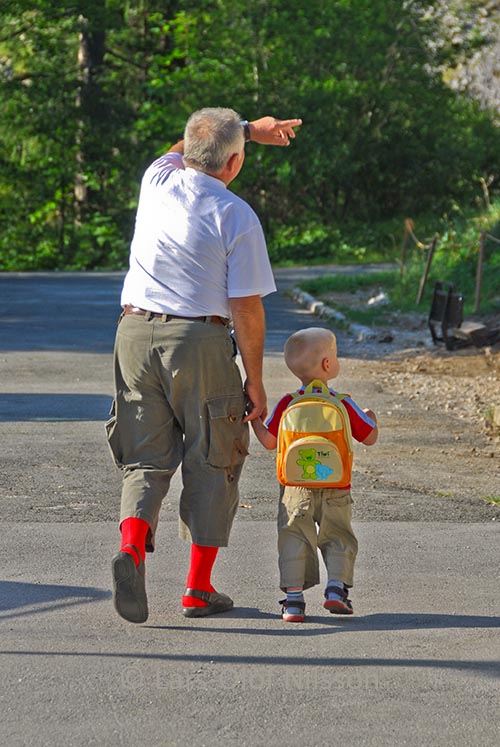
A small boy is taking a short walk with his grandfather.
A short walk with grandpa

Brief is sometimes used as a verb meaning inform and as a noun meaning short information, summary.

The press secretary briefed us about the decision.
Our boss gave us a first brief of the negotiations.

Brief can also mean instructions about duties, responsibilities, etc.

Part of the architect’s brief was to design a building that would comply with local environmental regulations.

A briefing is a meeting in which detailed information or instructions are given.

Debriefing has two meanings: A detailed report given by an agent or a soldier after a mission has been carried out or a meeting held after a traumatic event (such as a natural disaster, a hijacking, etc.) to let victims deal with their trauma.

Briefs is another word for underwear, while shorts are trousers (usually for sport or relaxing) that reach only to the thighs or the knees. Shorts can also refer to underwear for men.

Before this text gets too long, I had better remind myself to be brief or to keep it short.

My next blog post takes a look at briefly and shortly, two words with very different meanings.

Take or bring

These two words usually indicate direction in relation to the speaker or the listener.

Take implies moving something from where the speaker or listener is.
Bring implies moving something to where the speaker or listener is.

Can you take my dress to the dry cleaner’s?
You can bring it back when you come next week.
Should I take some flowers to Mary’s party?
Don’t take your car to work today. There’s an awful traffic jam in the centre.
Bring the salt, please!
Wait a second! I’ll bring you your towel.

In the last sentence we look at the situation from the listener’s point of view. In other words, we have changed the perspective as in the following examples:

I took your briefcase home with me by mistake.
Thanks for your kind invitation. I’ll be happy to come. Shall I bring some wine?

A woman is standing in front of a lot of wine bottles in a liquor store
Shall I bring some wine?

To sum up, think of movement to or from a position. You can compare with come and go. You come here and you go there. Bring it here and take it there.

That said, you may find that either take or bring is used when the direction is unclear or unimportant. It can also depend on whether you put the emphasis on here or there, if you think about where you are now or already imagine yourself at another location.

When you say ”Should I take some flowers to Mary’s party?”, you are still at home. When you say, ”Shall I bring some wine?”, you are already imagining yourself at the party.

Like or such as?

Some writers use like when they should have used such as instead.

When you suggest a category or give something as a type example, write like:

Uncle Bill often listens to crooners like Bing Crosby.

Here Bing Crosby represents a specific type of singers, crooners, who often perform in a sentimental way (think of Crosby’s version of White Christmas and you will understand!).

The sentence does not state that Uncle Bill actually listens to Bing Crosby, only that he listens to singers of that type.

When you specify singers that Uncle Bill listens to, use such as:

He collects vinyl records with singers such as Dean Martin, Fred Astaire, Perry Como, Tony Bennett and Nat King Cole.

These singers are generally known as crooners, and here we understand that Uncle Bill has their records.

A plate of squids.
Seafood such as octopus is healthy

Some more examples:

You should eat more fruits like oranges.
Citrus fruits such as tangerines, clementines and lemons are rich in C vitamin. 
Advanced tools like robots can reduce production costs.
Robots can take over more complicated tasks such as welding and grinding.
The course covers basic concepts of business administration such as accounting, finance, human resources and marketing.

A songwriter like Leonard Cohen will be remembered forever (Songwriters similar to Cohen will never be forgotten).
A songwriter such as Leonard Cohen will be remembered forever (Leonard Cohen will never be forgotten).

There should not be a comma or a colon after such as, but you can have a comma before such as. Leave out that comma if what comes after such as is additional and essential information.

To sum up:

Use like when you refer to a category (you imply comparison).

Use such as when you give actual examples (you imply inclusion).

« Older posts Newer posts »

© 2026 copyeditor.se

Theme by Anders Norén — Up ↑