Your professional help to improve your written English

Category: language (Page 5 of 8)

Farther or further?

What is the difference between farther and further?

Not a very big one, I’d say. Except in certain cases.

Both words can be used regarding distance. There are language purists who maintain that farther refers to physical distance and further to imaginative distance, but common usage does not seem to make that distinction. (If you want to stick to the distinction, it may help to remember that farther has far in it.)

The café is at the farther end of the street.
I can’t walk any farther.
Can you see her at the further end of the corridor?
We can’t get any further – there is a tree across the road.
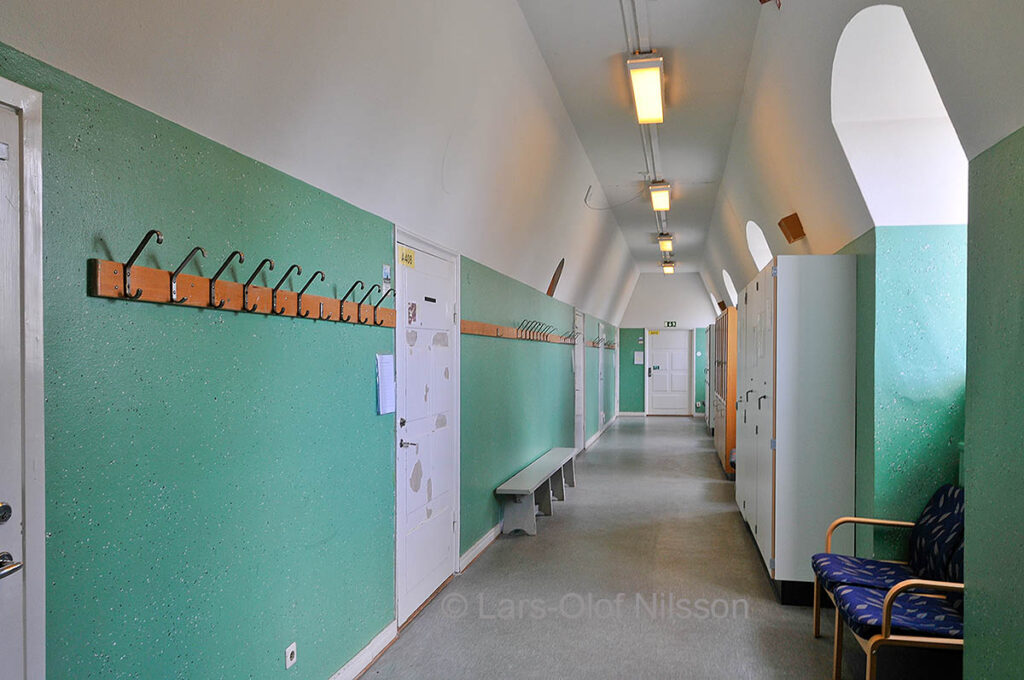
The music room is on the left further down the corridor

Further can also mean more, in addition.

We need to look further into this.
Does it need further explanation?
Further (= Furthermore), recent research has shown this to be true.

In examples like the above, use further and not farther.

We can find further in some common sayings:

Nothing could be further from the truth.
We’ll deal with that further down the road (= later on, in the future).
He can’t see further than the end of his nose.
This will be in effect until further notice.
They left without further ado (= immediately, without delay).
Seek no further!
This can be seen as a further expression of her influence on the political development.
Further to our telephone conversation this morning, I am writing to confirm our order for ten ink cartridges.
I have nothing further to add.

Further can also be a verb, meaning promote, develop, help.

What can we do to further her studies?
He only  wants to further his own interests.

In sum, if you want to write farther, do so only when it is a matter of physical distance. You will never be wrong using further.

Read about the difference between furthermore and moreover here.

Briefly and shortly

Briefly and shortly are easily confused. While brief and short are often synonymous (as you can read here), briefly and shortly have very different meanings.

Briefly means for a short time.

She appeared briefly in an Italian film.
In Britain he worked briefly as a veterinarian.
We spoke briefly about the weather.

Shortly means soon and indicates a point in time.

Shortly after her exam, she moved to Paris.
I’ll be with you shortly.

The following message should not worry you too much:

The landlord will briefly cut off electricity in the building.
This means that you will be without electricity for a short time.

However, if you get the following message, you might worry:

The landlord will shortly cut off electricity in the building.
This implies that you may not have time to prepare for the power cut.

To sum up:

Briefly tells us that something lasts for a short time.
Shortly indicates a short time before or after something.

I’ll see you briefly means that I will see you for a short time.
I’ll see you shortly means that I will see you very soon.

A young couple is seen from above waving goodbye.
They said they’d be back shortly

As I mentioned above, you can read about the words brief and short here.

Take or bring

These two words usually indicate direction in relation to the speaker or the listener.

Take implies moving something from where the speaker or listener is.
Bring implies moving something to where the speaker or listener is.

Can you take my dress to the dry cleaner’s?
You can bring it back when you come next week.
Should I take some flowers to Mary’s party?
Don’t take your car to work today. There’s an awful traffic jam in the centre.
Bring the salt, please!
Wait a second! I’ll bring you your towel.

In the last sentence we look at the situation from the listener’s point of view. In other words, we have changed the perspective as in the following examples:

I took your briefcase home with me by mistake.
Thanks for your kind invitation. I’ll be happy to come. Shall I bring some wine?

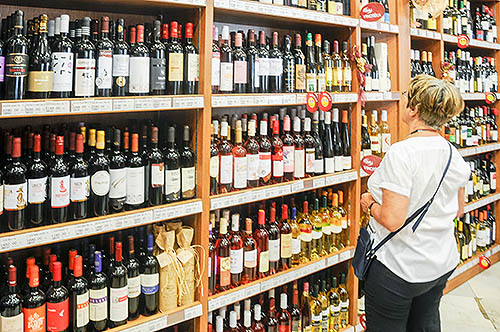
A woman is standing in front of a lot of wine bottles in a liquor store
Shall I bring some wine?

To sum up, think of movement to or from a position. You can compare with come and go. You come here and you go there. Bring it here and take it there.

That said, you may find that either take or bring is used when the direction is unclear or unimportant. It can also depend on whether you put the emphasis on here or there, if you think about where you are now or already imagine yourself at another location.

When you say ”Should I take some flowers to Mary’s party?”, you are still at home. When you say, ”Shall I bring some wine?”, you are already imagining yourself at the party.

Overuse of the -ing form

As we have seen in another blog post, the -ing form, the present continuous, indicates that something is going on just for the moment.

I’m writing an email on the balcony (momentarily).
He writes articles for monthly magazines (a regular activity).

He is living in France (temporarily).
I live in Sweden (Sweden is my home country).

To say that someone is only temporarily in a place, the verb stay is often used.

He is staying at a small hotel in Lyon.

Man on a balcony is writing on a laptop
I’m writing an email on the balcony

Non-native speakers of English whose mother tongue only has the present simple sometimes tend to overuse the present continuous when they speak English, since they believe that to be the common form. Even if they intend to convey a permanent state, they may say or write sentences such as the following (for the use of the asterisk read at the end of this text):

*I’m travelling to work by bus every morning all year round. (Since this is what happens regularly you should say I travel to work by bus every morning.)

*He is designing cars. (This is his permanent job, hence the correct sentence would be He designs cars.)

*They are playing golf every weekend. (This is a habit, so it should be They play golf every weekend.) 

*That book is costing nine dollars. (That is a fixed price, so the correct version is That book costs nine dollars.)

*They are making washing machines. (Unless this is a temporary production and they normally make refrigerators, we must write They make washing machines.)

You should think twice before using the -ing form in English!

That’s OK!

In a previous blog entry we looked at acronyms and initialisms. Probably the most common initialism is OK. Meaning acceptable, everything is in order, go ahead, I approve, etc., it is used in many languages.

Just as internet-savvy young people nowadays use fancy abbreviations such as 2Y2 (to you too), CU L8ER (see you later) and TNX (thanks), people in the 1830s also made up funny abbreviations, often based on intended misspellings. They could, for example, write KY for know yuse, meaning no use. All right was abbreviated OW (oll wright). OK was such a misspelling, supposed to mean oll korrect. It became popular when it first appeared in print in the Boston Morning Post in 1839.

In 1840, President Martin van Buren campaigned for reelection, and his supporters chose O.K. as the motto for the campaign. Van Buren’s nickname was Old Kinderhook, and supporters formed O.K. Clubs around the country. In the end, van Buren was not okayed by the voters; his opponent William Henry Harrison won the election.

OK became increasingly popular and is used all over the world in various versions such as okeh, okie, okej, okey, ookoo, owkej, hokay and others.

You can write OK in different ways, with and without full stops and in uppercase or lowercase letters. If you write for a journal, you should consult its style guide. OK is also written okay, and in student slang it became okey-dokey or okie-dokie.

Space people at NASA added a letter; AOK means All OK.

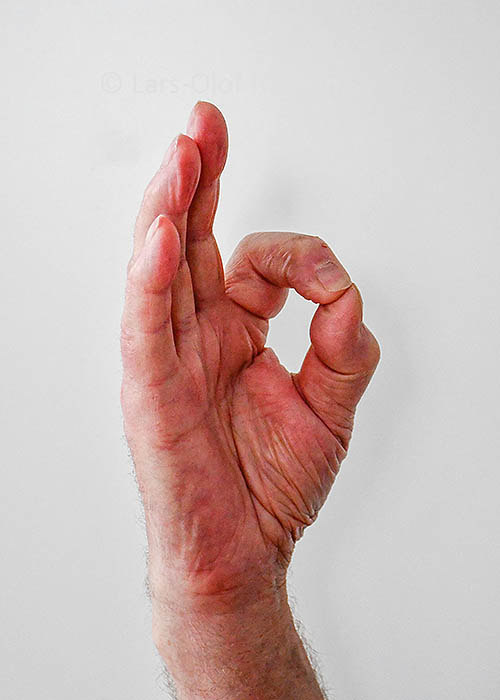
The initialism has its own sign: to signal OK, you form a circle with your thumb and first finger with the other fingers pointing upwards.

A hand showing the OK sign with thumb and index finger forming a circle and the other fingers pointing upwards.
That’s OK!

You should, however, be cautious about using this OK sign in certain countries, where it might be vulgar or offensive. In Brazil, for example, it is the equivalent of giving someone the middle finger (up yours!). The sign has also become linked to white supremacist groups in the USA.

There have been alternative suggestions about the origin of OK. One theory says that the abbreviation is from the Choctaw language (the Choctaws are a Native American people in the southeastern United States). An example of folk etymology is the belief that OK comes from the Scottish och aye, meaning oh yes. Another explanation points out that the letters OK were stamped on biscuits given to soldiers in the American Civil War. The biscuits came from Orrin Kendall’s bakery. But the most probable explanation is the one from the Boston Morning Post.

What is a backronym?

In an earlier blog post we looked at acronyms.

While an acronym is formed from a phrase, a backronym (or bacronym) is a word that is supposed to come from a phrase, but that phrase has been constructed (often humorously) to fit an existing word.

A well-known example of a backronym is posh, meaning stylish, elegant, upper-class. There is a popular belief that posh came from ’port out, starboard home’. It was thought that rich people would book two cabins on their voyage to India and back home, one on the port side of the ship and the other on the starboard. In that way they made sure that they could travel more comfortably, away from the heat of the sun. However, posh was quite simply a slang word in the late 1800s for an overdressed dandy. Another meaning of posh was a small coin, money. 

Starboard side of the deck of a passenger ship.
Port or starboard?

Another backronym is golf, which is – erroneously – said to come from gentlemen only, ladies forbidden. The word golf is considered to come from Middle Dutch cold, meaning stick or club.

A few more backronyms:

CopConstable on patrol
FordFix or repair daily
IBMIt's Better Manually
NavyNever again volunteer yourself
TipTo ensure promptness

A CAPTCHA is a distorted code you copy on a website to access a page. This is to prevent automated attacks on a website. The acronym is said to mean Completely automated public Turing test to tell computers and humans apart. However, the word is most likely a contrived acronym, in other words, a backronym. It was probably made in analogy with gotcha, ’I have got you’, meaning that you have caught somebody doing something wrong. A gotcha also means a sudden unexpected problem. The interesting thing is that there now is another way to prevent hackers from accessing a web page – and it is called GOTCHA, said to mean Generating panOptic Turing Tests to Tell Computers and Humans Apart. If you don’t know Alan Turing or the Turing Test, read here or here.

The Morse signal SOS is said to mean Save our Ship or Save our Souls. In fact, the alarm signal is …- – -… (three short, three long, three short without any pause), while the letters SOS in Morse code are three short, pause, three long, pause, three short.

Another distress signal is Mayday, mainly used by airplane or ship crews. It is used in voice communication via radio. In a life-threatening emergency the word is repeated three times. The word is said to have been created by Frederick Rockford, a radio officer at Croydon Airport in London in 1923. Mayday supposedly comes from the French m’aidez meaning ‘help me’ or venez m’aider meaning ‘come and help me’. So Mayday is not a backronym.

Neither is May Day, which is something completely different. It refers to the first of May (or the first Monday in May) being a festival in many countries to celebrate the arrival of spring.

Acronyms and initialisms

Acronyms are a type of abbreviation. They are formed by the first letter of each word in a phrase and usually, but not always, written in capital letters. An acronym is pronounced as a word:

ASAPAs soon as possible
HIRCHuman–industrial robot collaboration
NASDAQNational Association of Securities Dealers Automated Quotations
NATONorth Atlantic Treaty Organization
PINPersonal identification number
POTUSPresident of the United States
SARSSevere acute respiratory syndrome
SWOTStrengths, weaknesses, opportunities, threats
UNESCOUnited Nations Educational, Scientific and Cultural Organization
WADAWorld Anti-Doping Agency

Some words created as acronyms have become so common that people do not know they are acronyms. Some examples:

laserlight amplification by stimulated emission of radiation
radarradio detection and ranging
scubaself-contained underwater breathing apparatus
sonarsound navigation and ranging
taserThomas A Swift's Electric Rifle

There are other abbreviations formed by the first letter of each word, but they are pronounced as individual letters. These abbreviations are called initialisms. Some examples:

B2BBusiness-to-business
BMXBicycle motocross
CEOChief executive officer
CIACentral Intelligence Agency
DIYDo-it-yourself
FAQFrequently asked questions
FBIFederal Bureau of Investigation
IPOInitial public offering
NHLNational Hockey League
RFIDRadio frequency identification
WWWWorld Wide Web
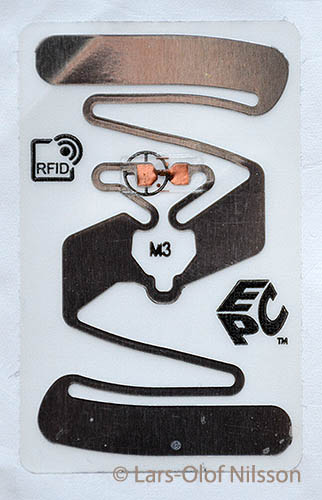
An RFID tag.
Detail of an RFID tag used on a garment

The most common initialism is probably OK. It is such a popular abbreviation that it deserves its own blog post.

Communicating on the internet has created many abbreviations:

2F4UToo fast for you
AFKAway from keyboard
BBSBe back soon
LOLLaughing out loud
KISSKeep it simple, stupid
ROFLRolling on the floor laughing
YOLOYou only live once

How the first letter in an abbreviation is pronounced determines whether the indefinite article should be written a or an. Compare the following:

A UNESCO spokespersonAn unknown person
An FBI agentA federal agent
An HR managerA human resources manager

In my next blog post you can read about backronyms.

Like or such as?

Some writers use like when they should have used such as instead.

When you suggest a category or give something as a type example, write like:

Uncle Bill often listens to crooners like Bing Crosby.

Here Bing Crosby represents a specific type of singers, crooners, who often perform in a sentimental way (think of Crosby’s version of White Christmas and you will understand!).

The sentence does not state that Uncle Bill actually listens to Bing Crosby, only that he listens to singers of that type.

When you specify singers that Uncle Bill listens to, use such as:

He collects vinyl records with singers such as Dean Martin, Fred Astaire, Perry Como, Tony Bennett and Nat King Cole.

These singers are generally known as crooners, and here we understand that Uncle Bill has their records.

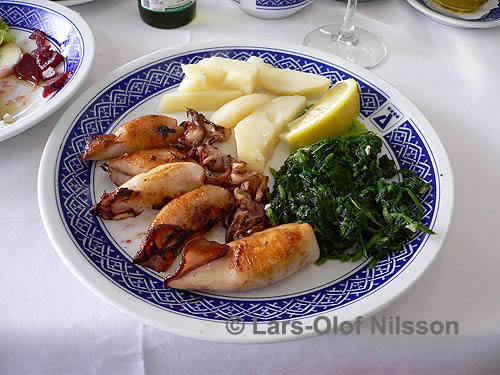
A plate of squids.
Seafood such as octopus is healthy

Some more examples:

You should eat more fruits like oranges.
Citrus fruits such as tangerines, clementines and lemons are rich in C vitamin. 
Advanced tools like robots can reduce production costs.
Robots can take over more complicated tasks such as welding and grinding.
The course covers basic concepts of business administration such as accounting, finance, human resources and marketing.

A songwriter like Leonard Cohen will be remembered forever (Songwriters similar to Cohen will never be forgotten).
A songwriter such as Leonard Cohen will be remembered forever (Leonard Cohen will never be forgotten).

There should not be a comma or a colon after such as, but you can have a comma before such as. Leave out that comma if what comes after such as is additional and essential information.

To sum up:

Use like when you refer to a category (you imply comparison).

Use such as when you give actual examples (you imply inclusion).

Recipe and receipt

What is a recipe and what is a receipt? The two words have different meanings, but it was not always so.

A recipe is something you use in the kitchen. It is a list of ingredients and instructions on how to prepare a dish or make a cake, for example.

When you pay for something you usually get a receipt, a proof of a transaction. Money has been received.

Originally these two words had the same meaning, coming from the Latin word recipere, to receive or take. In 14th century English both words referred to medicine, not to food. A prescription for a medicine usually started with the word recipe, meaning take.

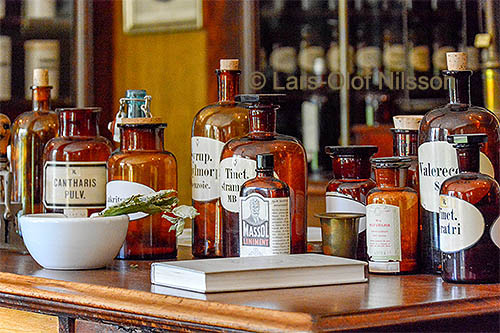
Interior of a pharmacy with bottles of medicine.
Perhaps you need a prescription for this

There is not really much difference between preparing medicine and preparing food – in both cases it is a matter of preparing ingredients – so in the 18th century recipe began to be used also in the kitchen.

Recipe can also be used metaforically in expressions such as a recipe for disaster or a recipe for success.

In modern language, prescription is used to refer to medicine. The doctor prescribes what medicine you should take.

Then, when you have paid the doctor, he may write out a receipt.

Enquire and inquire

Enquire and inquire both mean to ask or seek information about something. The corresponding nouns are enquiry and inquiry.

Basically there is no big difference in meaning between these words. It can be generally said that inquire is the common form in the USA and enquire in Britain.

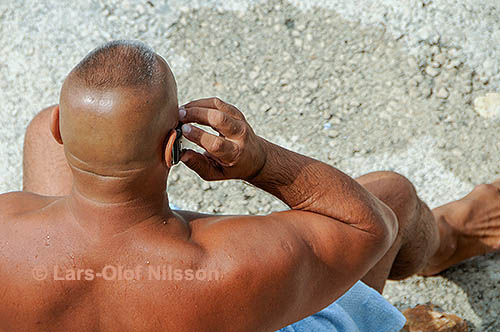
Burly man on a beach speaking on a cellphone. He is enquiring about renting a sunshade.
The man enquired about renting a sunshade

However, there are writers – particularly in Britain – who make a slight distinction between the two forms of the word. They use enquire simply as a synonym of ask in a general sense. Inquire is used with the meaning of making a formal investigation.

My boss enquired about the passing away of our dog.

The police are making inquiries to find the owner of the abandoned car.

If you write American English, you could use inquire, but otherwise you need not worry about which form is correct. As always, choose one form and be consistent throughout your text!

« Older posts Newer posts »

© 2026 copyeditor.se

Theme by Anders NorénUp ↑