Your professional help to improve your written English

Tag: language (Page 3 of 3)

Acronyms and initialisms

Acronyms are a type of abbreviation. They are formed by the first letter of each word in a phrase and usually, but not always, written in capital letters. An acronym is pronounced as a word:

ASAPAs soon as possible
HIRCHuman–industrial robot collaboration
NASDAQNational Association of Securities Dealers Automated Quotations
NATONorth Atlantic Treaty Organization
PINPersonal identification number
POTUSPresident of the United States
SARSSevere acute respiratory syndrome
SWOTStrengths, weaknesses, opportunities, threats
UNESCOUnited Nations Educational, Scientific and Cultural Organization
WADAWorld Anti-Doping Agency

Some words created as acronyms have become so common that people do not know they are acronyms. Some examples:

laserlight amplification by stimulated emission of radiation
radarradio detection and ranging
scubaself-contained underwater breathing apparatus
sonarsound navigation and ranging
taserThomas A Swift's Electric Rifle

There are other abbreviations formed by the first letter of each word, but they are pronounced as individual letters. These abbreviations are called initialisms. Some examples:

B2BBusiness-to-business
BMXBicycle motocross
CEOChief executive officer
CIACentral Intelligence Agency
DIYDo-it-yourself
FAQFrequently asked questions
FBIFederal Bureau of Investigation
IPOInitial public offering
NHLNational Hockey League
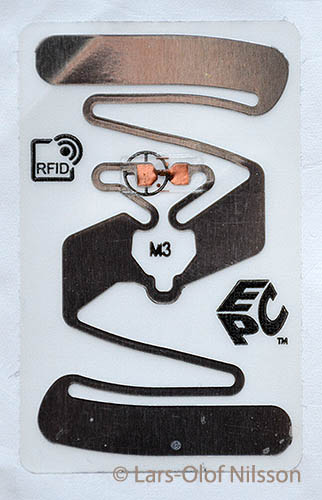
RFIDRadio frequency identification
WWWWorld Wide Web
An RFID tag.
Detail of an RFID tag used on a garment

The most common initialism is probably OK. It is such a popular abbreviation that it deserves its own blog post.

Communicating on the internet has created many abbreviations:

2F4UToo fast for you
AFKAway from keyboard
BBSBe back soon
LOLLaughing out loud
KISSKeep it simple, stupid
ROFLRolling on the floor laughing
YOLOYou only live once

How the first letter in an abbreviation is pronounced determines whether the indefinite article should be written a or an. Compare the following:

A UNESCO spokespersonAn unknown person
An FBI agentA federal agent
An HR managerA human resources manager

In my next blog post you can read about backronyms.

Can they be one person?

When we write about a person, it is sometimes not clear whether we refer to a man or a woman. Words such as somebody or person are neutral and can refer to either gender. That causes a problem for instance when we need to use a pronoun in the singular and still want to be gender-neutral.

One way is to write he or she and his or her or he/she and his/her

Somebody left his or her umbrella on the train.
The preferences a person has about what he/she does should be taken into account.

However, writing he or she, etc., looks a bit clumsy. Using they even if we talk about one person is nowadays generally accepted also by most style guides.

Somebody left their umbrella on the train.
Why would anybody want to end their life?
Each child played with their own toys.
Every teacher used their own method.

An umbrella hanging on a hedge.
Somebody left their umbrella here

In fact, they has been used in the singular (in writing) since the 14th century.

We can use the singular form themself if we refer to one person (and themselves is also correct).

Everybody must look after themself (or themselves).
It’s all about letting someone be themself. (Cambridge Dictionary)

To language purists the singular form themself may seem unnatural. However, it was used in English as early as the 1300s and there are examples from Emily Dickinson and F. Scott Fitzgerald well over a hundred years ago. Even if themself is still seen by a majority as nonstandard, the word is gaining popularity. And it is practical. After all, we write yourself and yourselves.

They is nowadays sometimes used to refer to a person whose gender is nonbinary, that is, who wants to be identified as neither male nor female. This use may still sound strange to many people.

Kim, our new coworker, wants to be referred to as they.
Sam drinks their coffee without sugar.

They was Merriam-Webster’s Word of the Year 2019.

Traditionallly, he used to refer to a person whose gender was unknown, but that use has come to be seen as sexist. Now some writers seem to want to counteract male dominance by using only the female forms she and her even when the reference may be to a neutral word such as person.

How can a person make sure that her views are taken into consideration?

To sum up, use they (and them, their) when the gender of the person referred to is unknown or irrelevant.

Avoid writing combined forms such as s/he or (s)he.

You can read about the use of gender-neutral titles here.

Which English should you use?

American English or British English? Or perhaps Oxford spelling? Does it matter which language you choose? Do your readers care?

Obviously, if you write for an American audience, you should write American English. And if you want to send a paper to a British journal, you should use UK English, which is another name for British English. Always check with the publisher or read the style guide of the journal. However, it is crucial that you are consistent and write your whole text in one and the same language.

When you write a doctoral thesis or a novel, the choice of language is yours. Only, as I said above, be consistent.

If you go for American English, use American spelling and write labor instead of labour, center instead of centre, catalog instead of catalogue, fulfill instead of fulfil, traveling instead of travelling, and so on. Use a z instead of an s in words like recognize and organization. (There are, however, some words that are always written with -ise or -yse – read more about them here.)

American English uses the serial comma, which is the comma that is placed before and or or in a series of words. An example: Horses, cows, and sheep are farm animals. British English does not use this comma (with the exception of Oxford spelling – see further down).

There are also differences in vocabulary. The American apartment is a flat in Britain, Brits walk on the pavement, while Americans use the sidewalk. And when you are angry in Britain, you are mad in America – to a Brit mad means crazy. When something is quite good it is very good in America but only fairly good in Britain.

There are, of course, also differences in grammar. When a British speaker uses the perfect tense, I have already called him, an American would use the past tense, I already called him. The American a real good movie is in British a really good film.

Oxford spelling is a variant of British English. It prefers -ize in words like organize and recognize instead of the spelling -ise in British English. The spelling with -ize is actually the oldest; organize, for example, appeared in a text in England as early as around 1425. The Oxford spelling is used by publishers like Collins, Longman and Oxford University Press (but not Oxford University!) and some academic journals in Britain. The Oxford spelling uses the serial comma, which therefore is also called the Oxford comma.

English and Englishes

English is the most widely used language in the world. It first spread through migration (mainly to North America, South Africa and Australia) and later, when the British Empire expanded, through the colonisation of Africa and Asia. When the English language came into contact with local languages, there grew new varieties, which now are called World Englishes.

American English differs from British English as well as from Australian English. There are even different Englishes in Britain; besides Standard English we find Scottish English, Cockney, Kentish, Scouse (Liverpool), Geordie (North East England) and others. The USA has General (or Standard) American English as well as varieties such as African American, Western, Mid-Atlantic and North Central English.

We can also speak about World English (in the singular), referring to the lingua franca, the common language used in communication all over the world between people who speak different native languages. In fact, most users of English in the world do not have English as their mother tongue but use it to communicate with other non-native (and, of course, also native) English speakers. Naturally, a speaker’s English will be affected by their native language when it comes to vocabulary, idioms, grammar, etc. So you can hear Chinglish (in China), Franglish (in France), Honglish (in Hong Kong), Singlish (in Singapore), Swinglish (in Sweden), and so on.

There are two challenges facing you as a non-native English writer. One is knowing which English to use. Usually your choice would be between British and American English. The other challenge is avoiding too great an influence from your own language. We will deal with those challenges later on in this blog.

Why do you need a copyeditor?

Even if you feel that your English is good, your text can always be improved. You have worked on your manuscript for a long time and know what you want to say, but it is difficult to see mistakes in your own text. Your brain knows what you want to convey and that competes with what you see when you read your text. An objective reader will have a fresh perspective, and a professional copyeditor knows what to look for.

In an academic setting, accuracy is a must. In research, attention to detail is taken for granted. A flawed manuscript will not be published. Not surprisingly, it is easier for writers with English as their mother tongue to have their papers accepted; the acceptance rate for non-native writers is much lower.

In business, correct English is just as crucial – language errors in advertising, in manuals, in customer correspondence or on a website will be noticed and will affect the company’s reputation negatively. That is why you need a copyeditor!

Always room for improvement

No matter how long or short your text is, I will help you refine it. Whether it is a doctoral thesis, a research paper for a journal, a manual, a cover letter or your website, your English will benefit from copyediting. You can read here about how I work. The whole process will be done in close collaboration between you, the writer, and me, the copyeditor.

Via the Contact page you can let me know your specific needs.

As your copyeditor, I can help you improve your English writing skills.


BELOW THIS TEXT YOU WILL FIND MY BLOG, THE LATEST POST FIRST. YOU CAN ALSO CHOOSE FROM THE LIST ON THE RIGHT OR TYPE A WORD IN THE SEARCH BOX AT THE TOP OF THIS PAGE.

This website is meant to be a resource especially for non-native writers in English to help them improve their writing skills.

Your English may be good, but perhaps you have not asked yourself which English you use, you have never reflected on the difference between compare to and compare with or realised that you wrote amount where you should have written number.

Perhaps you are a doctoral student planning your thesis. Or you are a professor writing a book or a research paper for an international journal. Maybe you have written a manual and feel that the language is not exactly what you would like it to be. Or you just want to have your CV or a cover letter checked for errors.

What I can do for you

In this blog you will get useful tips on writing in English. Through my long experience as a copyeditor I have learnt the typical errors that writers make and what linguistic problems they often meet and I can help you improve your English writing skills.

I will also tell you about resources that will enhance your writing. Whether books, apps or websites, they will help you write much better.

So, if you want to read my blog, scroll down and you will see my blog entries starting with my latest text. You can also choose a topic from the list in the sidebar on the right or search for a specific word.

And when you feel that your text needs copyediting, send it to me

On my other pages here you can learn about how I work and read comments from some of my many satisfied clients. And if you decide to let me copyedit your text, you should read my advice for writers.

The CEO of a Swedish multinational firm was once asked what language the company used. The answer was, “Bad English”.

Most users of English are non-native speakers and, not surprisingly, the language used is often, as the Swedish manager put it, bad English.

What’s the problem?

Communicating in a second language often involves ambiguity and misunderstanding and can eventually lead to serious problems. An example can be found in the sentence you just read: The English word eventually means in the end, finally, sooner or later, while the Swedish word eventuellt means possibly, potentially.

Not connected…

Can you connect with your readers? Bad English may prevent you from being published. And if you manage to be published in spite of language deficiencies, your readers will doubt your professionality. Poor language will make them lose interest in what you are trying to say; they may even mistrust your message or simply not understand it. 

The difference between good and bad English is crucial. My role as copyeditor is to make sure that bad English is transformed into good English. I do so in close collaboration with you, the writer. Together we will make you a better English writer. We are on the same page!

You are welcome to visit this site again and again. Or, better still, why not sign up for my newsletter? Then you will know when there is something new to read on this page, something that will make you a better English writer.

My posts will, I hope, be your stepping stones to better writing.

The image shows stepping stones in a street in Pompeii, Italy to illustrate how to improve writing skills
Stepping stones in Pompeii, Italy

Note: When there is an asterisk (*) in front of a word or a phrase in my posts here, it means that the word or phrase is wrong or not accepted language. You can find examples here, here and here.

Newer posts »

© 2026 copyeditor.se

Theme by Anders NorénUp ↑